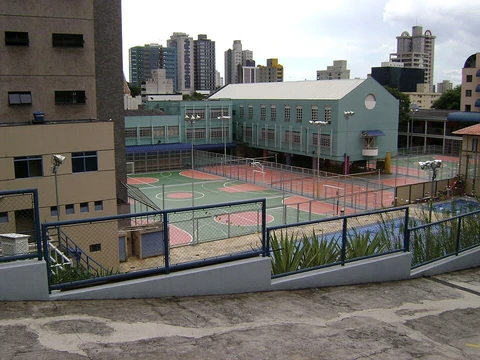
Jai alai
Basque sport using a wicker glove to hurl a ball at high speed.
Jai alai is a Basque sport involving bouncing a ball against walls by accelerating it to high speeds with a xistera, a wicker basket-like glove. It is a variation of Basque pelota, and its name, coined by Serafin Baroja in 1875, means 'merry festival' in Basque. The sport is played worldwide, especially in Spain, France, Florida, and Baja California.
- Origin
- Basque Country
- Inventor
- Serafin Baroja (coined term in 1875)
- Also known as
- Zesta-punta in Basque
- Ball speed record
- 302 km/h (188 mph) by José Ramón Areitio
- Governing body
- Basque government promotes it as 'the fastest sport in the world'
- Common scoring
- First to 7 or 9 points
Lore & Background
The game begins when the frontcourt player of the first team serves the ball to the second team. The winner of each point stays on the court to meet the next team in rotation; losers go to the end of the line. The first team to score 7 points (or 9 in Superfecta games) wins, with place and show positions awarded. Playoffs decide tied scores. The most common American version is played in round robin format, usually between eight teams of two players each or eight single players. The ball is hand crafted from wound virgin rubber strands tightly wrapped in two layers of goat skin. Players must catch and return the ball in one fluid motion with no juggling or holding.
Reader's Guide
Jai alai has been played in the United States since at least the 1904 World's Fair in St. Louis, and enjoyed popularity as a gambling alternative to horse and greyhound racing, particularly in Florida and Connecticut. The first Florida fronton opened at Hialeah Race Course in 1924, and the Miami Jai-Alai Fronton (now Casino Miami) became the world's largest with a record audience of 15,502 in 1975. The sport faced a major strike from 1988 to 1991 by the International Jai-Alai Players Association, the longest in American professional sport, as 90% of players—Basque—demanded improved conditions. The rise of Native American casinos and state lotteries later provided alternatives to jai alai betting. In the Philippines, jai alai was played at the Manila Jai Alai Building, a significant Art Deco structure demolished in 2000, and was prohibited in 1986 due to game fixing, though it returned in 2010. The sport remains active in places like Dania Jai Alai in Florida, which experienced a resurgence in 2025–2026.
Did You Know?
- The term 'jai alai' was coined by Serafin Baroja in 1875 and means 'merry festival' in Basque.
- The ball used in jai alai is hand crafted from wound virgin rubber strands and wrapped in two layers of goat skin.
- The sport once held the world record for ball speed at 302 km/h (188 mph), performed by José Ramón Areitio.
- The International Jai-Alai Players Association held the longest strike in American professional sport from 1988 to 1991.
More in Sports & Athletics 1-20
Spotted an error? Know more?
This is a living reference — every entry is fact-audited, and reader corrections feed straight into our audit queue. Suggest an edit · See this site's audit record